
Open-Plan Kitchen Renovations in Melbourne's Eastern Suburbs: What You Need to Know Before You Remove That Wall
Thinking about opening up your kitchen in Ringwood, Croydon or Doncaster? Learn what's involved in an open-plan kitchen renovation — costs, wall removal, permits and design tips for Melbourne eastern suburbs homes.
Baretta
3/1/20263 min read
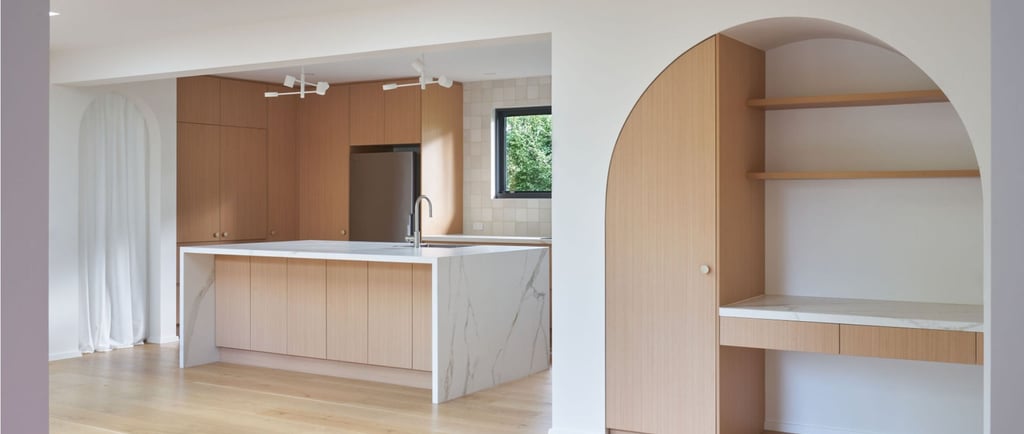
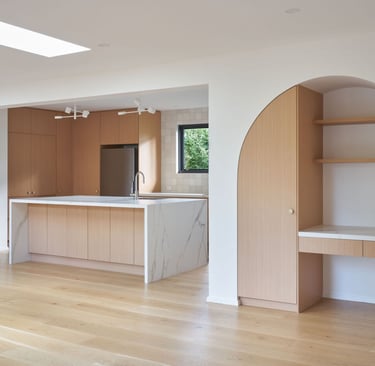
It's one of the most popular renovation requests we get from homeowners across Ringwood, Croydon, Mitcham and Doncaster: 'Can we open up the kitchen?' The answer is almost always yes — but the how, the how much, and the how long vary significantly depending on your home. This guide covers everything eastern suburbs homeowners need to know before planning an open-plan kitchen renovation.
Why Open-Plan Kitchen Renovations Are So Popular in Melbourne's Eastern Suburbs
Most homes built in Melbourne's eastern suburbs between the 1960s and 1990s were designed with closed, galley-style kitchens separated from the living and dining areas. This made sense at the time — kitchens were functional, utilitarian spaces. Today, the kitchen is the social heart of the home. Families gather around island benches, friends watch the cook, and indoor-outdoor flow to rear decks and gardens is expected.
Opening up the kitchen — typically by removing the wall between the kitchen and living or dining room — is the single most transformative renovation you can make to a mid-century eastern suburbs home. It changes how the home feels, how you use it every day, and significantly increases its market value.
• Most common scenario in Ringwood and Croydon: 1970s brick veneer with a closed kitchen separated from a formal dining room. Remove the dividing wall (often non-structural), combine the two spaces, and create an open-plan kitchen and dining area that connects to the rear living space.
• Most common in Doncaster and Mitcham: 1980s brick home with a kitchen that opens only to a small meals area. Removing the wall to the lounge creates a large open-plan living zone. Often combined with a new island bench.
Is That Wall Structural? The First Question to Answer
Before any wall comes down, the first step is to determine whether it's structural (load-bearing) or non-structural. This single factor has the biggest impact on cost and complexity.
Non-structural walls - Timber-framed internal walls that don't carry roof or floor load. In most 1970s–1990s eastern suburbs homes, the wall between the kitchen and dining room is non-structural. Removing it is relatively straightforward: demolish, patch the ceiling and floor, and you're done. Cost: $2,500–$6,000 typically, inclusive of patching and making good.
Structural (load-bearing) walls - Walls that carry the weight of the roof structure or upper storey. Removing these requires a structural engineering assessment, a steel beam (LVL or steel) to span the opening, and building permits. This adds significant cost and time — but it's done every day by experienced builders and the results are spectacular. Budget an additional $8,000–$20,000 for a structural wall removal depending on the span and beam size required.
How do you know which one you have? We always recommend having this conversation before committing to a design. Don't rely on a neighbour's experience — every home is different.
Design Considerations: Getting the Most From Your Open-Plan Kitchen
Once the wall is out, you have design decisions to make that will define how the space feels for years to come:
• Island bench vs. peninsula: An island bench (four sides accessible) is the most flexible option and works beautifully in open-plan spaces. A peninsula (connected to the wall on one side) is more space-efficient in smaller rooms. We design both regularly for eastern suburbs homes.
• Zoning the space: Without walls, you need to define the kitchen zone, the dining zone, and the living zone through design — via different flooring materials, overhead lighting zones, ceiling details, or the positioning of furniture and the island bench.
• Ventilation: An open-plan kitchen needs a powerful rangehood — at least 900mm wide, ducted to outside if possible. Cooking smells travel freely in open-plan spaces. Don't underestimate this.
• Lighting design: You'll need separate lighting circuits for the kitchen work zone (bright task lighting), the dining area (warm, dimmable), and the island bench (statement pendants). Good lighting design in an open-plan space makes an enormous difference.
• Flooring continuity: Flowing the same floor material throughout the open-plan space (whether hardwood timber, engineered timber, or large-format tiles) makes the space feel larger and more cohesive.
What Does an Open-Plan Kitchen Renovation Cost in Melbourne's Eastern Suburbs?
The total cost depends on the combination of wall removal, kitchen renovation scope, and any associated works. Here are realistic ranges for eastern suburbs homes in 2026:
• Non-structural wall removal + mid-range kitchen renovation: $38,000–$62,000
• Structural wall removal + steel beam + mid-range kitchen renovation: $50,000–$80,000
• Structural wall removal + premium custom kitchen + open-plan redesign: $75,000–$120,000+
These figures include all associated trades (plumbing, electrical, plastering, tiling, painting) managed under one contract. They represent realistic market rates for licensed, quality builders working in Ringwood, Croydon, Mitcham, Doncaster and Blackburn in 2026.
Presence Design+Build specialises in kitchen renovations across Melbourne's eastern suburbs. Call Craig on 0408 301 888 for a free in-home consultation — we'll assess your spaces, discuss your vision, and give you a clear picture of what's involved.